Life is Really Simple: A Modern Design Philosophy
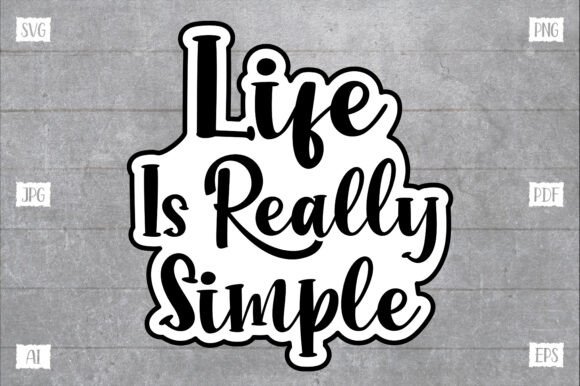
In an era defined by visual noise and digital complexity, the principle that life is really simple serves as a powerful compass for graphic designers and brand strategists. This isn't just a motivational quote; it's a foundational approach to creating clear, impactful, and user-centric design. When applied to visual communication, this philosophy strips away the unnecessary, focusing on the essential message, function, and emotional resonance that drive engagement and build lasting brand identity. It champions clarity over clutter, making it an indispensable tool in any modern creative workflow.
The Core of Effective Visual Design
At its heart, design is problem-solving. Whether crafting a logo, a social media campaign, or a user interface, the goal is to communicate an idea or facilitate an action as efficiently as possible. Adhering to a minimalist aesthetic doesn't mean being boring; it means being intentional. Every element, from typography to color palette, must earn its place. This approach enhances visual hierarchy, ensuring the viewer's eye is guided naturally to the most important information, which is crucial for everything from web design to packaging.
Practical Applications Across Creative Projects
The versatility of this design principle is its greatest strength. It can be seamlessly integrated into numerous facets of a professional's work. Consider how a clean, simple design asset performs across different mediums:
- Branding and Logo Design: A simple mark is more memorable, scalable, and versatile across applications from a favicon to a billboard.
- Marketing Materials: Flyers, posters, and ads with clear focal points and uncluttered layouts convey their message quickly, improving conversion rates.
- Social Media Content: In fast-scrolling feeds, bold graphics with minimal text stop the thumb and communicate instantly.
- Website and UI Design: Simplicity improves user experience (UX) by reducing cognitive load, making navigation intuitive and content digestible.
- Editorial and Packaging Design: Clean layouts and straightforward imagery help products stand out on shelves and make publications more readable.
- Merchandise and Presentations: Whether on a t-shirt or a slide deck, a simple, powerful graphic carries more weight and professional presentation value.
Integrating Simplicity into Your Design Workflow
Adopting this mindset requires a deliberate process. Start by defining the core objective of the design. What is the one thing the audience must understand or feel? Build your visual hierarchy around that single point. Choose a limited, cohesive color palette and pair it with highly legible typography. Embrace white space as an active design element that gives your composition room to breathe, improving readability and focus.
When evaluating creative assets, ask critical questions: Does this element support the main message? Can it be simplified without losing meaning? Is it consistent with the broader brand identity? This critical eye ensures that every component, from an icon to a photograph, contributes to a unified and professional result. This is where quality assets shine; a well-crafted SVG or high-resolution PNG allows for this scalability and clarity without compromising on visual integrity.
Ultimately, embracing that life is really simple in design is about respecting both the message and the audience. It leads to more timeless, adaptable, and effective creative work. By prioritizing thoughtful composition and essential elements over trendy complexity, designers and creators produce visuals that not only look polished but also communicate with greater power and precision, strengthening brand identity and enhancing user engagement in a cluttered visual landscape.